
Traveling the Southeast in Shoulder Season
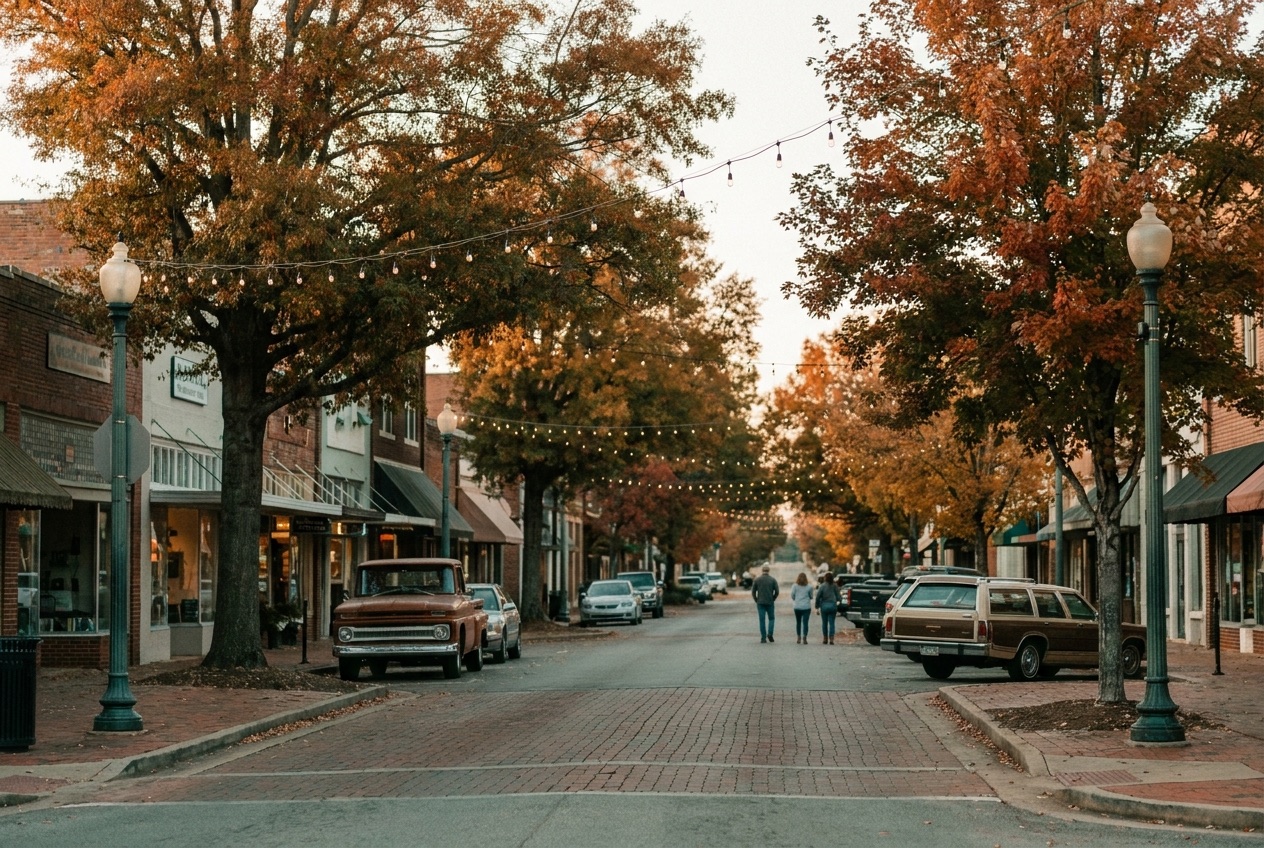
Shoulder season travel in the Southeast means spring and fall, the stretches on either side of the summer peak, and it's quietly the best time to come. The weather is mild, crowds thin out, and prices ease off their summer highs. Georgia in April or October gives you comfortable days and towns that aren't overrun. You just have to know the handful of weekends that break the pattern.
The weather, stated honestly
Spring and fall in Georgia are genuinely lovely, and we'll tell you the catch too, because pretending otherwise doesn't help anyone pack. October is the prize. The humidity finally breaks, the days settle into the seventies, the nights turn crisp, and the light gets that low golden quality that makes everything look better. If you get to pick one month to visit the Southeast, October is the one we'd point you to, and plenty of people who already know the region have figured that out, which is exactly why the good fall weekends fill up fastest.
Spring is beautiful too, and it comes with pollen. This isn't a minor footnote to gloss over. For a few weeks, usually late March into April, the pine and oak pollen coats everything in a fine yellow dust. Cars, porches, patio furniture, windshields, all of it turns yellow.
If you have allergies, that stretch can be genuinely rough, and you should plan for it with medication rather than be blindsided by it on day one. The flip side is that spring gives you the dogwoods and azaleas in full bloom and mild temperatures before the summer heat clamps down for good. Come in spring for the flowers, just don't come expecting a clean car.
Between the two, fall is the more reliable bet if your dates are flexible. Spring in the Southeast can be genuinely unsettled, warm one day and back to a cold snap the next, with the pollen on top. Fall tends to settle into a steadier groove, cooler and drier as it goes, right up until it turns properly cold in late November. If someone in your group has bad allergies, that alone can be the deciding factor for picking October over April, and it's the kind of local detail that doesn't show up in a weather app's average.
Both seasons share a trait that surprises people, which is how much the temperature swings in a single day. That's worth its own section, because it's the thing first-timers get most wrong when they pack, and getting it wrong means being uncomfortable for half of every day of the trip.
Packing for forty-degree mornings and seventy-five-degree afternoons
The thing that trips up first-time shoulder-season visitors is the daily temperature swing. A spring or fall day here can start in the low forties at dawn and climb to the mid-seventies by afternoon, which means the outfit you leave the house in is wrong by lunch. People pack for the forecast high, step outside at eight in the morning, and freeze on the first activity of the day. Layers are the whole answer. A jacket or fleece you can peel off and stuff in a bag, a warm layer for the morning and the evening, and shorts or lighter clothes underneath for the warm middle of the day.
This matters more if you're doing anything outdoors, which in shoulder season you should be, because that's half the point of coming. A morning hike at Sweetwater Creek in October starts cold and ends warm, and you want to be able to adjust as you go rather than tough out either the chill or the heat. Bring a light rain layer too, since spring in particular can turn wet without much warning, and a surprise shower is a lot more pleasant when you're prepared for it. Pack for a thirty-degree range in a single day and you'll be comfortable from the chilly start to the warm afternoon to the cool evening on the porch.
How pricing and availability move in shoulder season travel
Off-peak generally means better availability and softer pricing, and that holds across most of the Southeast in spring and fall. Summer and the winter holidays are the peaks that push demand and rates up. In the shoulder weeks, more places have openings, you're not booking six months out just to get anything decent, and the rates tend to sit below their peak-season levels. We won't put numbers on it, because pricing moves constantly and depends on the place, the town, and the exact dates, but the direction is reliable. Quieter season, easier booking, gentler prices, more room to negotiate on a longer stay.
The nuance is that shoulder season isn't uniformly quiet, and the exceptions are sharp. Certain weekends spike hard, and if your dates happen to land on one, you'll see peak pricing and thin availability in a season that's otherwise calm and cheap. Knowing which weekends those are is the difference between a great-value trip and wondering why everything's booked and expensive in the middle of an otherwise sleepy October. So book with the general pattern in mind, but check whether your specific dates collide with one of the events that break it, which is the next thing worth understanding before you commit.
One more piece of the pattern is worth knowing. Midweek in shoulder season is where the real value hides. If you can travel Sunday through Thursday instead of over a weekend, you dodge most of the local weekend demand entirely and you're often looking at the softest rates of the whole year. It's the sweet spot we point flexible guests toward, especially anyone on a work-from-anywhere schedule or retired and not tied to a Saturday arrival. A midweek stay in the shoulder weeks is about as good as booking gets around here.
Festivals and football Saturdays, the exceptions that spike towns
Two things reliably turn a sleepy shoulder-season weekend into a sold-out one. The first is festival season. Fall especially is thick with them across Georgia and the wider Southeast. The mountain towns run apple festivals and fall celebrations that draw big crowds, and a single popular festival can book out an entire small town's lodging for a weekend. The events themselves are wonderful and genuinely worth planning a trip around, but go in knowing that a festival weekend is a peak weekend in miniature, priced and booked accordingly, in a town that's dead quiet the week before and the week after.
The second, and it's a big one in the South, is college football. On a home game Saturday, the town hosting the game transforms completely. Lodging books out for miles in every direction, prices jump, traffic snarls, and the whole place reorganizes itself around kickoff.
If you're a fan, this is the reason to come, and it's a genuinely great experience worth building a trip around. If you're not a fan and you just want a quiet fall weekend, check the football schedule before you book, because accidentally landing in a college town on game day will blow up both your budget and your expectation of peace. Fall in the Southeast runs on the football calendar as much as the tourist calendar, and it pays to know which Saturdays are which before you pick your dates.
What's open and what's sleepy off-peak
One honest tradeoff of shoulder season travel is that not everything runs at full tilt. Seasonal operations, water parks, some outdoor attractions, certain guided tours, may be closed or on reduced hours in spring and fall. A place that's humming in July might be shuttered by late October with a sign on the door and a reopening date in the spring. The upside is that everything permanent, the restaurants, the museums, the state parks, the shops, the year-round attractions, is open and far less crowded, so you get to experience it the way it's actually meant to be experienced instead of shoulder to shoulder with the summer crush.
The move is to check ahead on the specific thing you're building the trip around. If there's a particular attraction that absolutely has to happen for the trip to feel worth it, confirm it's open on your dates and running normal hours, because seasonal closures catch people out more than anything else in the off-season. Beyond that one check, embrace the quiet. Shoulder season is when you get the trails, the parks, and the good restaurants without the wait or the reservation scramble, and a little planning around what's seasonal versus year-round means you never drive an hour only to hit a closed gate on the one thing you came to see.
State parks are the reliable backbone of an off-season trip here, because they run year-round and they're at their best in the cooler months anyway. Sweetwater Creek and the trails in the North Georgia mountains are open, uncrowded, and comfortable to hike in April or October in a way they simply are not in the July heat. The restaurants and shops in the smaller towns keep their normal hours too, and staff have more time for you when the summer rush is gone. What tends to close or shorten hours is the summer-specific stuff, the water attractions and the seasonal tour outfits, so if none of that was your plan anyway, you barely notice the off-season at all.
Why do hosts love shoulder-season guests?
We'll answer this one plainly, since we're the ones turning over the rooms between stays. Shoulder-season guests are, on the whole, our favorite guests, and it's not complicated. The season tends to attract people who travel a little more deliberately.
They're often here for the outdoors, the fall color, a specific festival, or a quiet getaway, rather than for a packed peak-season blowout. They tend to be lower-key, easier on the place, and genuinely happy to be somewhere calm. The frantic energy of high season just isn't there, and everyone, guests and hosts both, is more relaxed for it.
There's a practical side too. Shoulder season fills the gap between the peaks, so a good off-season guest is doing us a real favor by booking the shoulder weeks, and we tend to return that with more attention and more flexibility than we can spare when the calendar is slammed. Shoulder season travel is a stretch where the region is quietly at its best, the weather is comfortable, the crowds are gone, and the people who show up are the ones who came for exactly that. If you've been meaning to see this part of the country, spring and fall are when we'd tell you to do it, and we mean that as the people who'll be here to hand you the keys when you arrive. We can hold a checkout a little later or an arrival a little earlier in the shoulder weeks without it cascading into the next booking, and that small flexibility is a lot easier to give when the calendar around your stay is not stacked wall to wall.