
Furnished or Unfurnished: Which Rental Makes Sense for You
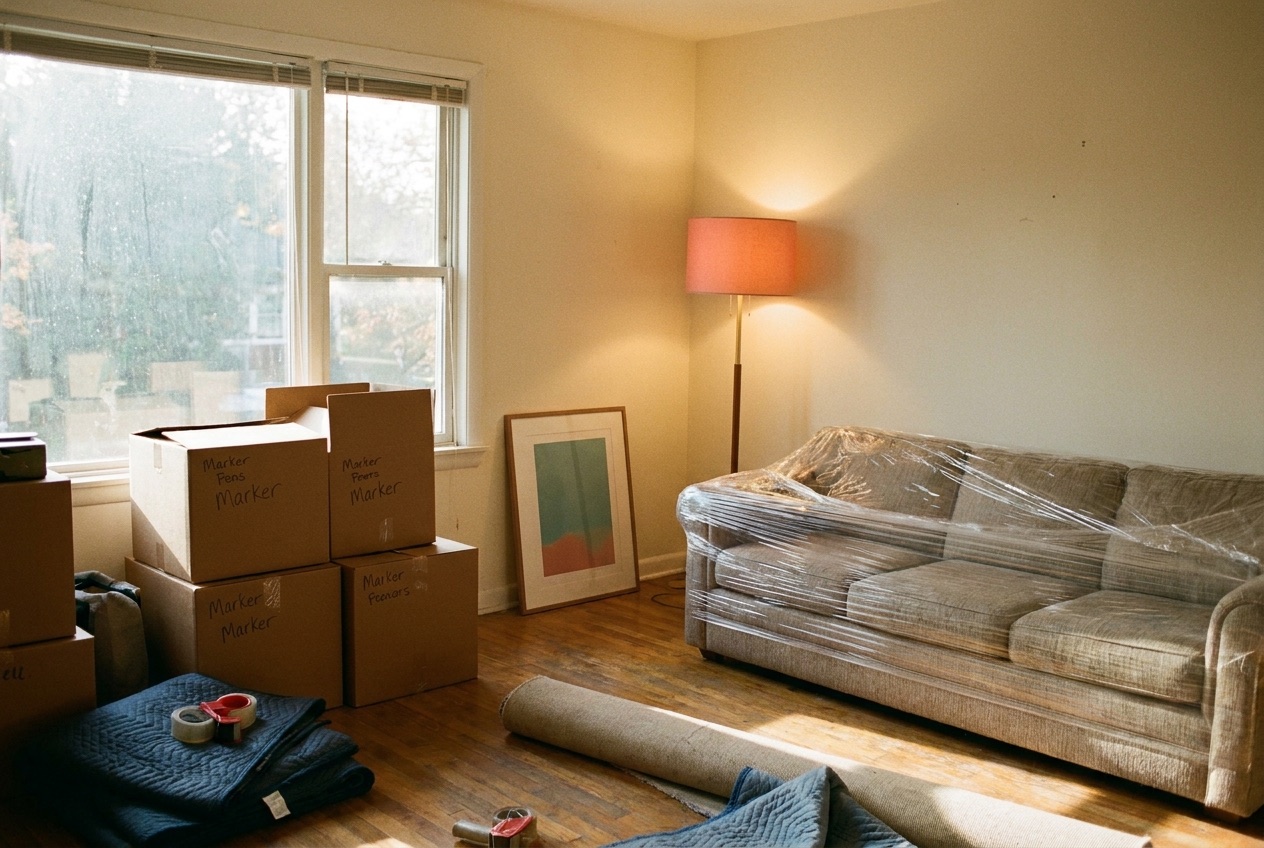
The furnished vs unfurnished rental question really comes down to how long you're staying and how much stuff you already own. If you're moving for a year or more and you have furniture, unfurnished almost always wins on cost. If you're landing for a few weeks or months, or arriving with suitcases instead of a truck, furnished pays for itself fast.
The true cost of furnishing a place from zero
People wildly underestimate what an empty apartment demands before it feels like a home. We furnish rooms for a living, so we replace this stuff constantly and we know exactly how many categories it takes. A bed and a mattress. A couch and something to eat at. A dresser and a nightstand. Then the invisible pile that eats your first paycheck, cookware, plates, silverware, a trash can, towels, sheets, a shower curtain, a lamp, a broom, a laundry basket, the extension cord you didn't know you needed.
None of it is expensive on its own, and that's the trap. Each thing feels like a small purchase, and then you've made forty small purchases in three weekends and your card is smoking. Furnishing even a modest one-bedroom decently runs into real money, and if you're buying cheap to save now, you're often buying twice, because the twenty-dollar pan and the flimsy bookshelf don't survive the first move. We won't invent a dollar figure for your city, but walk any furniture store with a notepad and total it up. The number surprises everyone the first time.
There's also the cost nobody prices in, which is time and decision fatigue. Furnishing from zero eats your first month of evenings and weekends. You're assembling flat-pack furniture at eleven at night, driving back to the store because you bought the wrong size curtain rod, waiting on a delivery window that blows a Saturday. If you value your first month in a new place, or you're starting a new job and need your head clear, that hidden tax belongs on the ledger next to the receipts.
Moving trucks versus suitcases
The single biggest hidden cost in the furnished vs unfurnished rental decision is the move itself. Moving a furnished apartment's worth of belongings across town is a truck rental, a day of your life, probably some friends you now owe dinner, or a moving crew that costs real money. Moving across state lines with furniture is a different animal entirely, often more than a month's rent by the time the truck, the gas, the boxes, and the labor are all counted.
Arriving with suitcases changes the entire equation. If you can walk into a furnished place with two bags and start living the same night, you've skipped the truck, the crew, the packing tape, and the exhaustion. For anyone relocating for work, testing a new city before committing, or simply hating the whole ordeal of moving, that alone can justify the higher monthly rent on a furnished unit. You're not just paying for the couch. You're paying to never load a mattress up a staircase in July.
It cuts the other way for a settled household. If you already own a full home's worth of furniture you love, paying a furnished premium means either abandoning your things or paying to store them, which we'll get to. For a family putting down roots for years, the truck is a one-time cost that disappears into the rearview, and unfurnished lets you keep the bed you actually sleep well in. Suitcase people and truck people are answering the same question with opposite correct answers. The mistake is assuming there's one right answer at all, when the honest answer depends entirely on which of those two people you are this year.
Why furnished usually pairs with shorter terms
Furnished rentals and shorter leases tend to travel together, and there's a plain reason. The whole value of furnished is that it removes the friction of setting up and tearing down a home. That friction is brutal for a three-month stay and trivial for a five-year one. So the market has sorted itself, and most furnished inventory lives in the world of temporary stays, corporate housing, and flexible-term rooms rather than year-long unfurnished leases.
The premium you pay on furnished isn't only for the furniture. You're also paying for flexibility and for everything bundled in. A well-run furnished rental covers the bed and the couch, but it also covers utilities, wifi, and the whole kitchen already stocked, so there's no deposit dance with the power company and no month-one scramble to own a can opener. That bundle has real value for someone who needs to land and function immediately, and it's priced accordingly. You're renting a working household, not an empty box you'll spend three weeks assembling.
Whether that premium is worth it comes down to your timeline again. Spread across a short stay, the convenience is a bargain, because the alternative is buying a household you'll dump in ninety days. Spread across two or three years, the same premium slowly turns into money you could have kept by buying furniture once. The break-even point sits somewhere in the range of several months to a year depending on your market, and past it, ownership usually wins on pure dollars. Before it, furnished usually wins on everything.
Storage-unit math when you already own furniture
Here's a middle case that trips people up. You own furniture, you're taking a furnished place for a while, and now you're staring at a storage unit to hold your things in the meantime. This can quietly be the worst of both worlds, so do the arithmetic before you sign the lease on the locker. A storage unit is a monthly bill that never ends and never gives anything back, and it stacks right on top of the furnished premium you're already paying.
Run the honest comparison over your actual stay. Add up the furnished premium plus the storage rent for every month you'll be gone, then weigh that against what it would cost to sell your furniture now and rebuild later. Sometimes storage clearly wins, especially for a short gap or for pieces you genuinely couldn't bear to lose. Sometimes it's a slow leak, and you'd come out ahead selling the couch, taking the furnished place clean, and buying fresh when you resettle. The unit feels like the safe choice, but safe and cheap aren't the same thing.
One quiet warning from watching this play out. Storage tends to outlast its plan. The three-month unit becomes an eighteen-month unit because deciding what to do with your stuff is annoying and easy to defer. If you go the storage route, put a hard date on it and mean it, or you'll pay rent for years to warehouse a dresser you've forgotten the color of. The locker is only a bridge if you've already decided where it lands. We've met plenty of people who paid more in storage over two years than the furniture was worth new, which is the kind of slow, quiet loss that never feels like a decision until you add it all up.
How deposits and wear expectations differ
The two rental types treat damage and deposits differently, and it's worth understanding before you sign either. On an unfurnished place, your deposit mostly guards the walls, the floors, and the fixtures, the things that belong to the building. Normal wear on carpet and paint is expected and shouldn't cost you, and a fair landlord returns the deposit minus genuine damage. The bar for what counts as your fault is relatively narrow, because you brought your own stuff and only the shell was ever ours.
Furnished changes the calculus because now the contents are the landlord's too. The couch, the mattress, the dishes, the television, all of it can be damaged or walk off, so furnished deposits sometimes run higher and the expectations are spelled out in more detail. As operators we expect a furnished place to show a little honest living, a fork that vanishes, a mug that chips. What we're guarding against is the burned couch, the stained mattress, the missing television, the real losses.
The protection for you as a renter is a written inventory at move-in. A decent furnished landlord distinguishes normal use from abuse, and the way you hold them to it is a signed list of what was there and what condition it was in on day one. Take your own photos too. When move-out comes, that record is what stands between a fair deposit return and a fight over a scratch that was there before you arrived. Confirm the inventory exists before you hand over a dime, and if a furnished landlord doesn't offer one, ask for it in writing.
Which situations settle the furnished vs unfurnished rental call?
A handful of life situations answer the furnished vs unfurnished rental question almost automatically. Military members on orders, students there for two semesters, and corporate relocations on a defined contract all lean hard toward furnished, because the stay has an end date and hauling furniture in for a known short window rarely makes sense. Add the person restarting after a divorce, who often walks away from a shared household with nothing and needs a working home tonight, not a three-week furnishing project. For all of them, furnished isn't a splurge, it's the practical floor.
Traveling nurses and contract workers land in the same bucket, chasing an assignment that runs three months and then moves them somewhere else entirely. So does anyone waiting on a house to close, or between homes for a season, or trying out a city before they uproot the family. When the stay is short and defined, or the future is genuinely uncertain, furnished removes a huge pile of friction at a premium that's easy to justify. The shorter and less certain the horizon, the more the furnished math tips in your favor.
The unfurnished case is just as clear on the other side. If you're settling somewhere for years, you already own furniture you actually like, and you want a place that's fully yours down to the mattress, unfurnished is the obvious and usually cheaper answer. The gray zone is the person who's genuinely unsure how long they're staying, and for them we'd lean furnished and flexible until the future gets clearer, then switch once you know you're rooted.
It's easier to commit to furniture after you've committed to a place, not before. We run furnished co-living rooms precisely for the people in that in-between stretch, the ones who need a real home right now without deciding the next three years today. The honest read is that furnished buys you time to decide, while unfurnished rewards you for having already decided. Figure out which of those you are, and the choice mostly makes itself.